The Bravest Thing Rob Anybody Ever Did: Learning to Read
Rob Anybody fights monsters without flinching—but the alphabet terrifies him. How a Feegle's battle with literacy became Pratchett's best metaphor for real courage.
The Bravest Thing Rob Anybody Ever Did: Learning to Read
Rob Anybody has fought the Queen of the Elves. He's charged headfirst into a Hiver, faced down the Wintersmith, and stood against the Cunning Man. He once led hundreds of Nac Mac Feegle into Fairyland itself—a place they'd already been thrown out of for "bein' drunk at two in the afternoon."
None of that scared him.
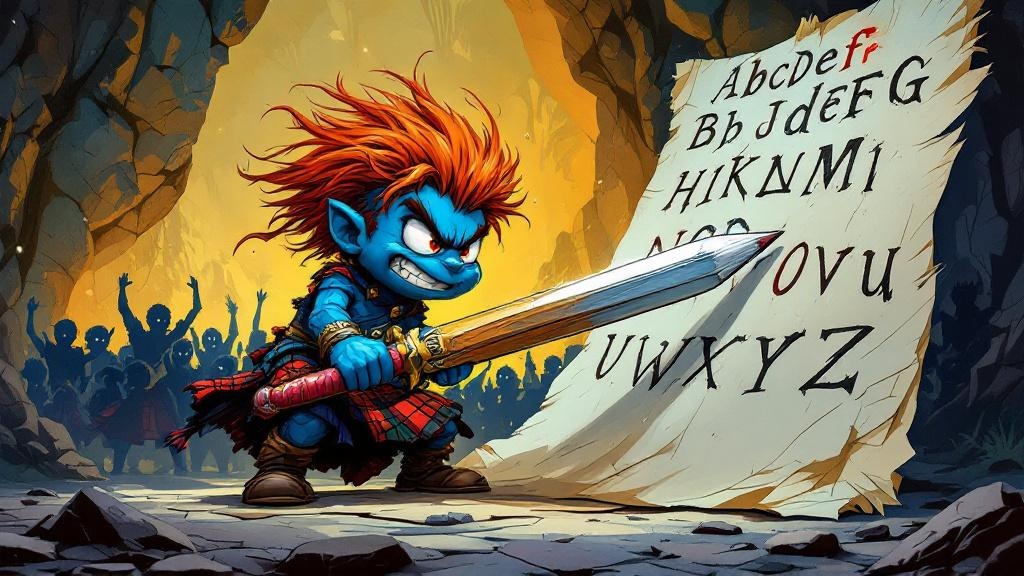
But in A Hat Full of Sky, Rob Anybody does something that terrifies him more than any monster ever could. He picks up a pencil and tries to write a word.
That word is "PLN."
It's meant to say "PLAN."
And it's the bravest thing he's ever done.
Why Words Are Worse Than Swords
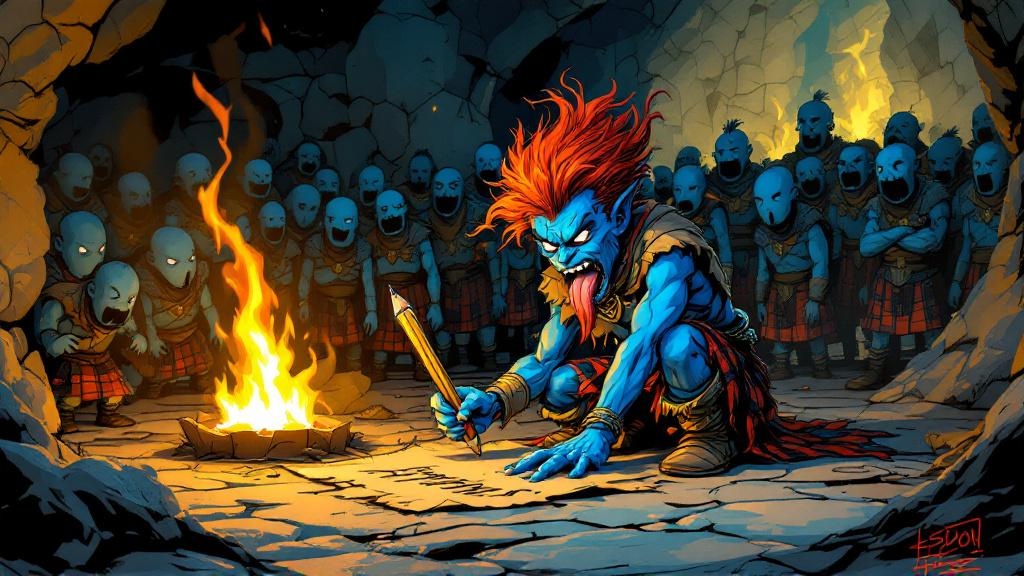
To understand why literacy terrifies the Nac Mac Feegle, you need to understand how they see the written word. It isn't just difficult for them. It's dangerous.
The Feegles have a saying: "A word writ doon can hang a man!" They believe—and given their lifestyle, they're not entirely wrong—that if your name is written down, you can be found, summoned, and held accountable. Written words are permanent. They can be turned against you. A spoken promise might be forgotten; a written one becomes a chain.
Rob Anybody's sword glows blue in the presence of lawyers. Not elves. Not demons. Lawyers. In a beautiful parody of Tolkien's Sting, which glowed near orcs, the Feegles' blades recognize the one enemy that genuinely threatens them: people with documents.
"Writing stays. It fastens words down. A man can speak his mind and some nasty wee scuggan will write it down and who knows what he'll do with those words."
This isn't just played for laughs—though it's very funny. Pratchett is drawing on something real about the relationship between power and literacy. Throughout history, the ability to read and write has been a tool of control as much as liberation. Laws, contracts, debts—the systems that pin people down are made of written words. The Feegles' fear of literacy is exaggerated, but the instinct behind it? That's genuine.
So when Rob Anybody sits down to learn his letters, he's not just struggling with an unfamiliar skill. He's confronting something his entire culture teaches him to fear. He's deliberately putting his name on paper, making himself findable in a world where the Feegles' greatest asset has always been being too small and too fast to pin down.
Jeannie's Revolution
The person who makes Rob face this fear isn't a monster or a villain. It's his wife.
Jeannie, Rob's kelda, comes from the Long Lake Clan—a more progressive group that took a different approach to the written word. Instead of fearing writing, the Long Lake Feegles decided to beat literate enemies at their own game. They became famous for their "verra com-plic-at-ed documents."
When Jeannie marries into Rob's clan, she brings this philosophy with her. She doesn't just suggest that Rob might want to learn his letters. She insists. Not just Rob—all the men. Jeannie is a modern kelda, and she refuses to be the only literate person in a clan of hundreds.
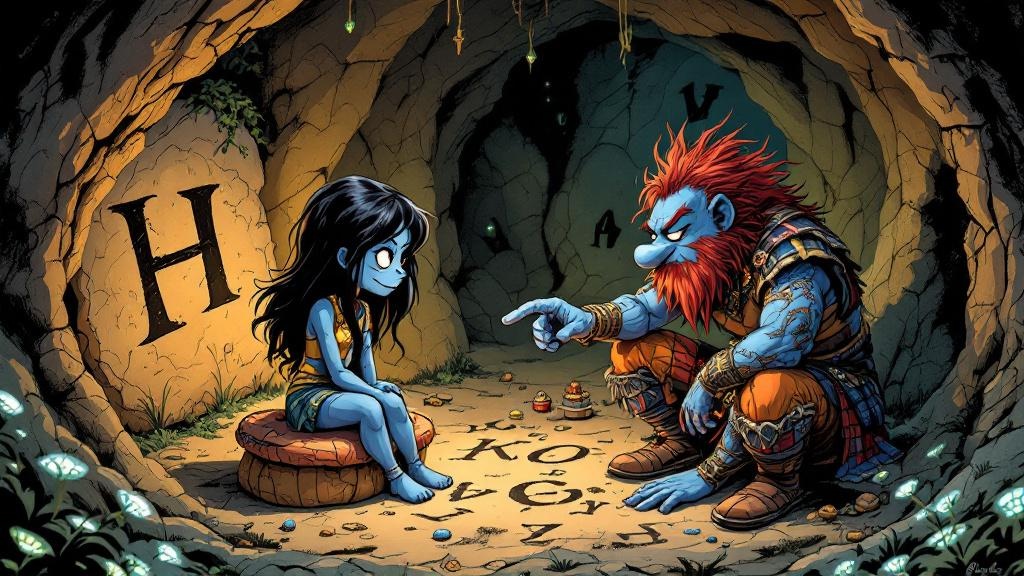
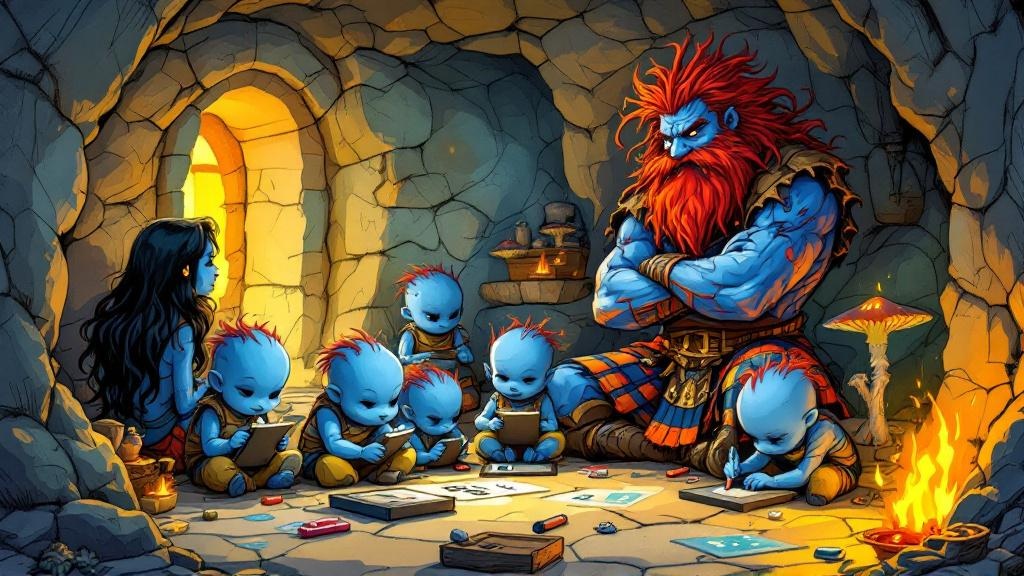
The teaching scenes are beautiful in their comedy and tenderness. Jeannie encourages Rob like a patient teacher with a nervous student: "There's my brave lad!" She teaches him that the letter R looks like "a fat man walking." And gradually, painstakingly, Rob learns to write his own name.
Think about that for a moment. Rob Anybody—who would headbutt a cliff face without hesitation—needs his wife to tell him he's brave for holding a pencil. And Jeannie means it. She understands that this is harder for him than any battle, because in battle, Rob is doing what comes naturally. With letters, he's fighting against everything he believes and everything his people have told him.
"The letter R looks like a fat man walking. And with that, a warrior begins his hardest battle."
That's not comedy. Well, it is comedy—Pratchett is too good a writer to let a moment exist without being funny. But it's also one of the most genuinely moving character arcs in the Tiffany Aching series.
The "PLN" That Changed Everything
The scene in A Hat Full of Sky is one of Pratchett's finest moments of character writing:
"At dawn Rob Anybody, watched with awe by his many brothers, wrote the word: PLN on a scrap of paper bag. Then he held it up. 'Plan, ye ken,' he said to the assembled Feegles. 'Now we have a Plan, all we got tae do is work out what tae do.'"
There's so much packed into this moment. Rob's brothers watch with awe—not mockery, not amusement, but genuine wonder. They understand what it costs him to do this. The fact that "PLN" only roughly approximates "PLAN" doesn't diminish the achievement; it amplifies it. Rob is doing something so far outside his comfort zone that getting most of the letters right is a triumph.
And then there's the punchline, perfect Pratchett: having a Plan doesn't mean they know what to do. The word is there, scratched on paper bag, but the action still needs figuring out. It's a joke about the gap between intention and execution—and it's also a metaphor for Rob's entire literacy journey. Writing the word is just the beginning.
Fighting What Actually Frightens You
Here's the thing about the Nac Mac Feegle: they fight everything. They fight monsters, elves, lawyers, other clans, inanimate objects, and occasionally the concept of gravity itself. Fighting is what they do. It's their default response to every situation, and they're astonishingly good at it.
But none of that counts as bravery. Not really.
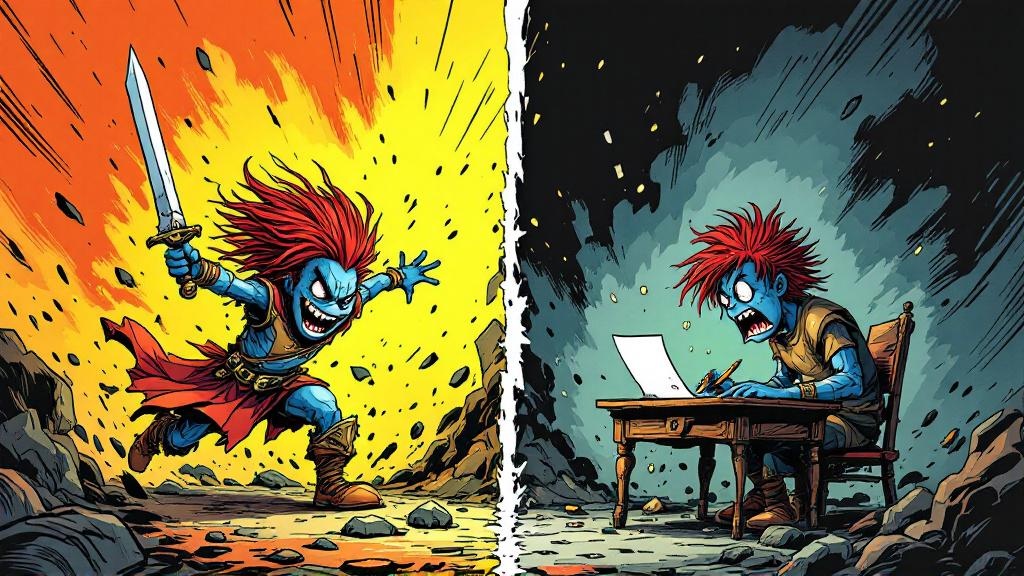
Pratchett understood something essential about courage: doing what you're good at isn't brave, even if it's dangerous. The Feegles enjoy fighting. They rush toward danger with glee because danger is their natural element. You might as well call a fish brave for swimming.
Real bravery is confronting what genuinely frightens you. For most people, that's not monsters under the bed. It's the things that make you feel small, stupid, or vulnerable. It's raising your hand in a classroom when you don't understand. It's admitting you can't do something that seems easy for everyone else. It's picking up a pencil when your entire culture tells you that pencils are the enemy.
Rob Anybody, warrior chieftain, leader of hundreds, fearless in the face of elves and Hivers and elemental winter gods—is terrified of the alphabet. And he learns it anyway.
That's the kind of bravery Pratchett valued most. Not the dramatic, sword-swinging kind, but the quiet, stubborn kind. The kind that means showing up tomorrow and trying again, even though you got it wrong yesterday.
The Immigrant Parent's Dream
There's a detail in Rob's literacy arc that hits harder the more you think about it. Rob doesn't just learn to read for himself. He becomes determined that his sons will read better than he does.
"Rob doesn't learn to read for glory. He learns so his sons won't have to be afraid of it."
This is the immigrant parent's dream, transplanted into a Feegle mound. Every generation of parents who struggled with something—a new language, a new country, a new way of living—and pushed through it so their children wouldn't have to struggle the same way. Rob's literacy isn't about personal achievement. It's about breaking a cycle.
The Chalk Hill Clan feared writing for generations. That fear kept them safe in some ways (hard to serve a warrant on someone whose name isn't written down) but limited them in others. Jeannie's insistence on literacy isn't just progressive—it's protective. A clan that can read contracts can't be cheated by them. A clan that can write its own documents has power that a clan of illiterates doesn't.
Rob sees this. Maybe not immediately, maybe not in those exact terms. But he understands, on some deep level, that his sons deserve better tools than he had. And so he faces the thing that scares him most, not because he wants to, but because it's what a good father does.
What This Says About Pratchett
Terry Pratchett famously said: "If you trust in yourself...and believe in your dreams...and follow your star...you'll still get beaten by people who spent their time working hard and learning things and weren't so lazy."
That quote is funny, but it's also deadly serious. Pratchett believed in education—not the institutional kind that teaches facts without understanding, but the real kind. The kind that requires you to be honest about what you don't know and brave enough to fix it.
Rob Anybody's literacy arc is Pratchett's love letter to everyone who ever struggled to learn something that seemed impossible. The adult returning to school. The person learning to read in their forties. The parent sitting at the kitchen table with homework that might as well be in a foreign language, refusing to give up because their child needs them to understand it.
The Feegles' physical bravery is spectacular but easy. Learning to read is neither spectacular nor easy. It's slow, embarrassing, and full of small failures. Rob writes "PLN" instead of "PLAN" and his brothers watch in awe, but we can imagine the sessions that came before—the letters that wouldn't cooperate, the words that fell apart, the moments when Rob must have wanted to throw the pencil down and go headbutt something instead.
He didn't. He kept going. And that's the bravest thing he ever did.
The Lesson the Feegles Teach
There's a pattern in the Tiffany Aching books that's easy to miss: the Feegles teach Tiffany as much as she teaches them.
Tiffany learns about First Sight and Second Thoughts from Granny Weatherwax. She learns about herbs and headology from the older witches. But from the Feegles, she learns something different: that loyalty doesn't need to be complicated, that bravery means facing what frightens you rather than what's merely dangerous, and that the people who matter most are the ones who show up and keep showing up, even when it's hard.
Rob's literacy arc is the Feegle version of that lesson. He shows up. He keeps showing up. He doesn't pretend it's easy or beneath him. He faces the page like he'd face an enemy—except this enemy can't be headbutted into submission, which makes it infinitely worse.
"The period of time it takes a pictsie to go from normal to mad fighting mood is so tiny it can't be measured. Learning to read takes considerably longer."
And in doing so, he demonstrates something that resonates beyond the pages of a fantasy novel: the courage to be bad at something. To try, fail, try again, and accept that progress is slow and unglamorous. In a world that celebrates the dramatic gesture—the sword raised on the hilltop, the battle cry that echoes across the chalk—Rob Anybody's greatest act of courage is writing three letters on a paper bag.
PLN.
Plan, ye ken.
The Bottom Line
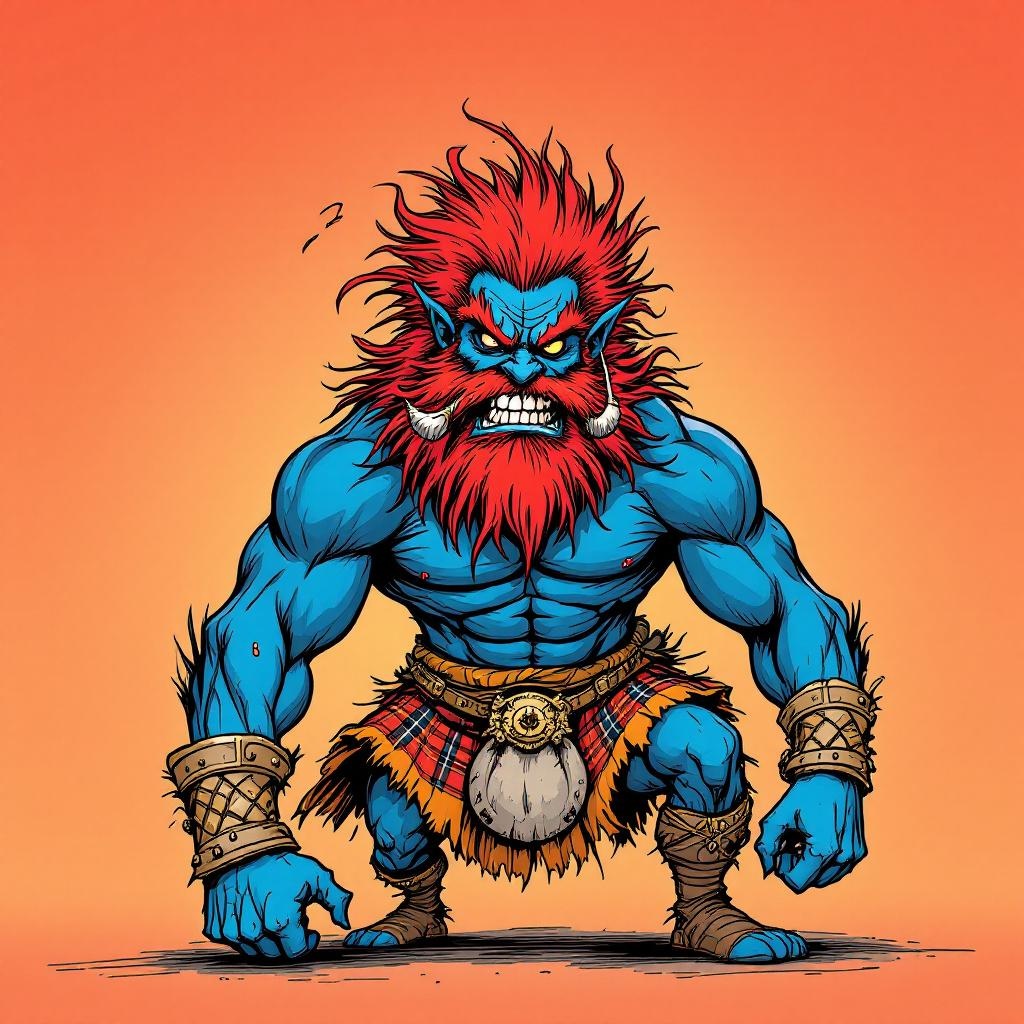
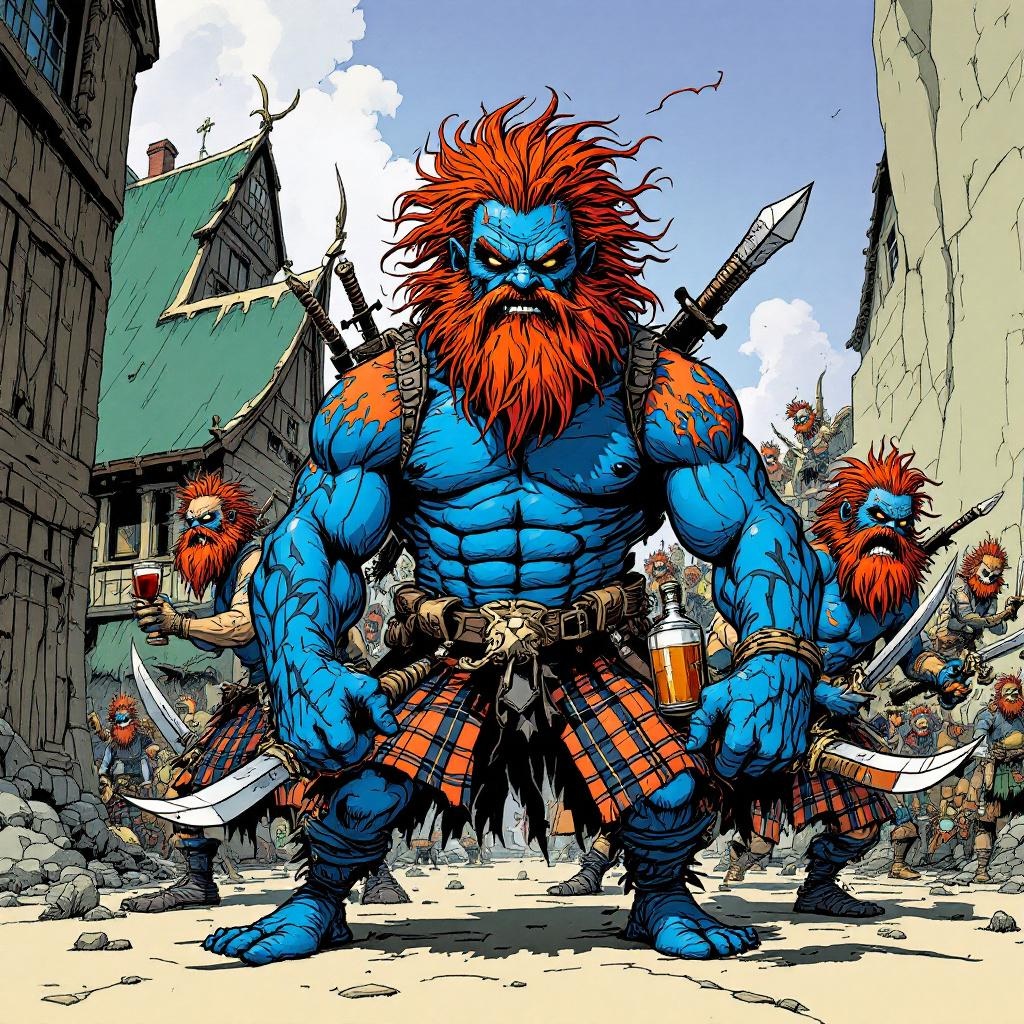
Rob Anybody is six inches of blue-skinned, red-haired fury. He'll fight anything. He'll headbutt anything. He once charged into Fairyland with nothing but attitude and a small sword.
But his bravest moment has nothing to do with fighting. It's the morning he sat down with a scrap of paper bag, his brothers watching in silence, and scratched three letters that changed everything.
The Feegles feared writing because it pins you down. Rob learned to write because some things are worth being pinned down for. His wife. His sons. His clan's future.
That's not just a character arc. That's Pratchett telling you what real courage looks like.
It looks like PLN.
Want to understand Rob's philosophy of freedom? Read about how his battle cry reveals Pratchett's view of authority. Or meet the nine-year-old who outsmarted his clan's marriage ritual and became temporary kelda.