'At That Price, I'm Cutting Me Own Throat': How Vimes Accidentally Created Discworld's Greatest Salesman
In Night Watch, time-traveling Vimes gives young Dibbler his famous catchphrase—creating an ontological paradox that reveals something profound about Discworld's reality.
"At That Price, I'm Cutting Me Own Throat": How Vimes Accidentally Created Discworld's Greatest Salesman
Here's a question that shouldn't bother you but absolutely will once you think about it: where did Cut-Me-Own-Throat Dibbler get his name?
The obvious answer is that he gave it to himself. Dibbler's relentless sales patter always ends with some variation of "at that price, I'm cutting me own throat"—a claim so transparently false that it somehow circles back around to endearing. Of course that's where the nickname came from.
But Terry Pratchett, being Terry Pratchett, couldn't leave it alone. In Night Watch, he reveals the actual origin of the catchphrase, and it's a time-travel paradox that's either brilliantly funny or deeply unsettling, depending on how hard you think about it.
Sam Vimes gave Dibbler his catchphrase. Thirty years before Dibbler would become famous for it. Because Vimes had traveled back in time and already knew it.
The Scene That Explains Everything
The moment happens during the Glorious Revolution of the People's Republic of Treacle Mine Road—one of the darker, more personal chapters in Vimes's life. He's been thrown thirty years into the past by a magical accident, and he's trying to survive a revolution he already lived through once as a young man.
At a barricade, Vimes encounters a young entrepreneur stirring a cauldron of something that could generously be called "stew." The young man is already recognizably Dibbler: same ratty appearance, same desperate enthusiasm, same absolute confidence that this venture will be the one that works.
"It's called Victory Stew, sergeant," the young Dibbler says. "Tuppence a bowl or I'll cut my throat, eh?"
Vimes, who has known CMOT Dibbler for decades in his own timeline—who has bought countless suspicious sausages from him, who has watched him fail upward through Holy Wood and rock music and back down to meat products—looks at this young man trying out his catchphrase for the first time.
"Victory Stew. Tuppence a bowl or I'll cut my throat, eh?"
"Close enough," Vimes says.
And with two words, he seals the loop.
Young Lance-Constable Sam Vimes (the one who actually belongs in this timeline) looks at the stew's strange lumps seething in the scum and asks what's in it. Dibbler's answer is perfect: "It's stew."
When young Vimes protests weakly that it "looks... very nice," older Vimes covers for him: "You'll have to excuse the lance-constable, Mr Dibbler. The poor lad was brought up not to eat stew that winks at him."
It's a throwaway gag in a book full of them. But it's also something else entirely.
The Paradox Nobody Talks About
Think about what actually happened in that scene.
Vimes knew Dibbler's catchphrase because he'd heard Dibbler say it for thirty years. But Dibbler only says it because Vimes responded to his first attempt with "close enough"—validation from a man he respected, at a moment when he was trying to establish his brand.
Where did the catchphrase come from?
Not from Dibbler inventing it. Not from Vimes creating it. It came from... nowhere. It exists because it exists. The information has no origin point—it's just always been circulating through time, passing from future to past and back again.
This is what philosophers call a bootstrap paradox, or an ontological paradox—a thing that creates itself. The Discworld equivalent of "which came first, the chicken or the egg?" except the answer is "yes."
Pratchett knew exactly what he was doing. He even lampshaded it: the paradox "was of course evened out by the history monks."
The History Monks are Discworld's temporal maintenance crew—monks who literally patch together the timeline when things go wrong. They're the reason the Discworld's history mostly makes sense despite all the time travel and magical accidents. When someone creates an ontological paradox like the Dibbler situation, the History Monks quietly smooth it over, redistributing causality until everything adds up.
But the fact that they had to intervene tells us something important: Dibbler's catchphrase shouldn't exist. It's a glitch in reality, a piece of information that bootstrapped itself into existence through a closed loop.
And Pratchett decided this was appropriate for Dibbler specifically.
The Accidental Entrepreneur
Why Dibbler?
Of all the characters in Ankh-Morpork—a city teeming with watchmen, assassins, wizards, and guilds—why would Pratchett choose to give the suspicious sausage vendor a supernatural origin story?
Because Dibbler isn't just a character. He's a force of nature.
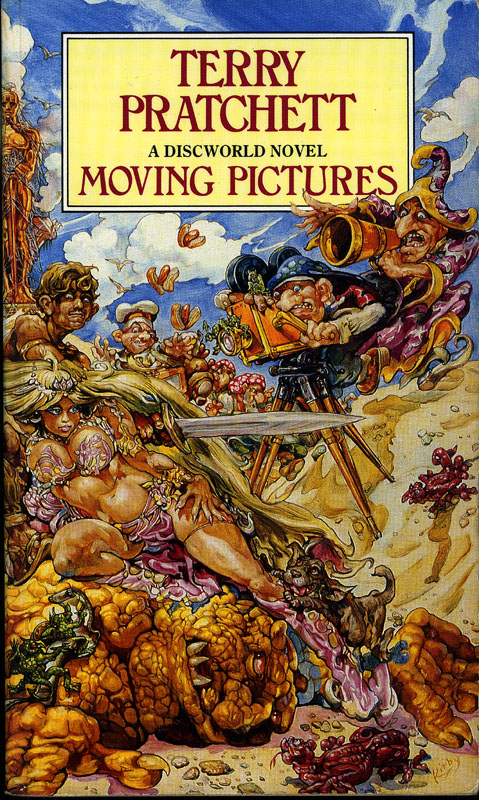
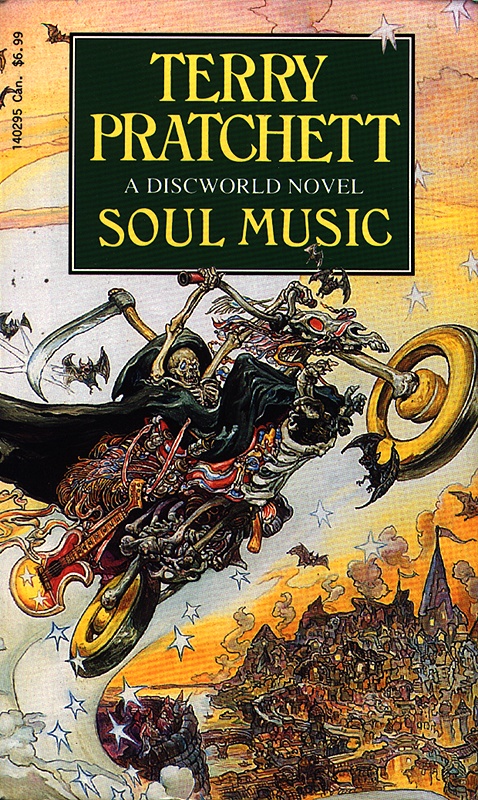
Claude Maximillian Overton Transpire Dibbler has been described as "Discworld's most enterprisingly unsuccessful entrepreneur." He fails at everything. His sausages are made of things that have, at best, been near a pig. His ventures inevitably collapse. When he managed to become a film mogul in Moving Pictures and a rock impresario in Soul Music, ancient forces destroyed both industries before he could enjoy his success.
And yet. And yet.
"Wherever people are prepared to eat terrible food, there will be someone there to sell it to them."— The Discworld Companion
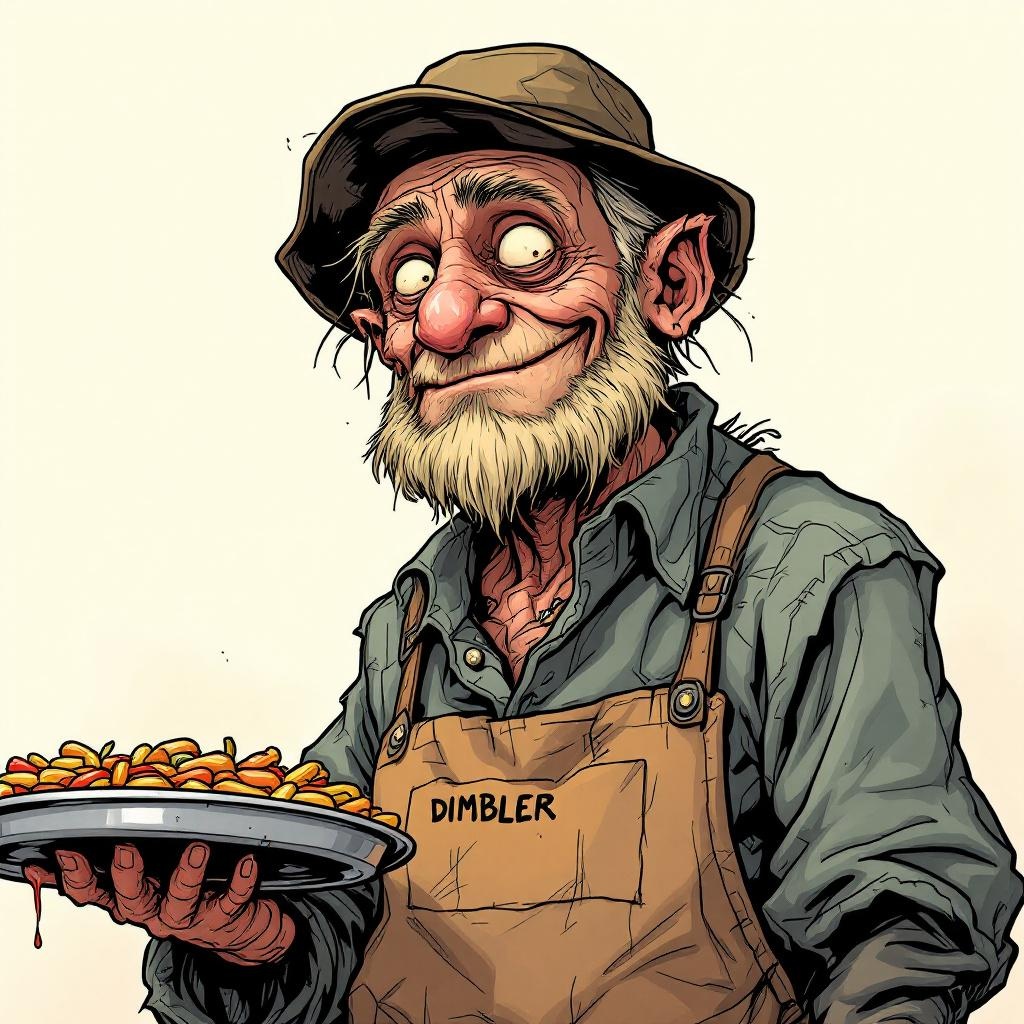
Dibbler is always there. Every morning, he's back on the streets with his tray, selling sausages-inna-bun that nobody wants but everybody eventually buys. He can't be stopped. He can't be discouraged. The universe keeps knocking him down, and he keeps getting up, and somehow—impossibly—he never actually starves.
Giving him a time-loop origin story makes perfect sense. Dibbler doesn't obey normal rules of causality because he doesn't obey normal rules of anything. He's the cockroach of capitalism, the survivor who shouldn't survive, the salesman whose existence seems to violate basic logic.
Of course his catchphrase came from nowhere. Of course the History Monks had to intervene. That's just Dibbler.
The Back to the Future Connection
Fans have noticed that the Dibbler scene echoes Back to the Future—specifically the moment when Marty McFly casually tells Goldie Wilson he'll be mayor someday, accidentally kickstarting the ambition that makes it happen.
Or perhaps it's the "Johnny B. Goode" scene, where Marty plays a song that won't be written for decades, and Chuck Berry hears it over the phone, creating another bootstrap paradox.
Pratchett was almost certainly making this reference deliberately. He loved poking at genre conventions, and time travel stories are full of paradoxes that usually get hand-waved away. By having Vimes create Dibbler's catchphrase—and explicitly noting that the History Monks had to fix it—Pratchett was acknowledging the absurdity while making it part of the story.
But there's a difference between Marty's accidental influence and Vimes's.
Marty changes the future by accident, but his presence creates alternate timelines—things genuinely change because of his interference. Vimes doesn't change anything. Everything he does while in the past was always supposed to happen. Young Dibbler was always going to meet "John Keel" at the barricades. He was always going to try out his catchphrase and get validation from a man who'd heard it a thousand times.
The loop was already closed before it opened.
What This Says About Discworld
The Dibbler paradox isn't just a clever joke. It reveals something fundamental about how Pratchett's universe works.
In the Discworld, some things are inevitable. Not because of fate or destiny—Pratchett was too skeptical for that—but because of what he called narrative causality. Stories have power on the Disc, and certain stories want to happen.
The wizard Rincewind theorizes that equivalents of Dibbler exist everywhere on the Disc. Not relatives—parallel evolution. Wherever civilization exists, a Dibbler will emerge to sell people questionable food at prices that will supposedly cost him his livelihood.
Consider the evidence:
- Disembowel-Meself-Honourably Dibhala sells suspiciously fresh thousand-year eggs in the Agatean Empire
- Cut-Me-Own-Hand-Off Dhblah sells disturbingly live yogurt in Omnia
- Fair Go Dibbler sells pie floaters in Fourecks
- Al-Jiblah operates in Klatch
- May-I-Never-Achieve-Enlightenment Dhiblang sells disreputable yak-butter tea in the Hublands
- May-I-Be-Kicked-In-My-Own-Ice-Hole Dibooki sells conveniently exploded whale meat
- Swallow-Me-Own-Blowdart Dhlang-Dhlang sells green beer somewhere tropical
None of these people are related to Ankh-Morpork's Dibbler. They evolved independently, filling the same ecological niche: the desperate optimist who will sell you something terrible and somehow make you feel you've gotten a deal.
If Dibbler is a universal constant—if the Dibbler-shaped hole in reality will always be filled—then does it matter where his catchphrase came from? He was always going to exist. He was always going to say something like "cutting me own throat." The time loop didn't create Dibbler; it just... formalized what was already inevitable.
The Fixed Point
In Night Watch, Vimes learns a harsh lesson about time travel: you can't change things. Or rather, you can't change important things. The History Monks allow for small variations, but the big events—the revolution, the deaths, the shape of history—those are fixed.
Young Dibbler saying "I'll cut me throat" might seem like a small thing. But in Discworld terms, it's not. It's the moment when the narrative locks in, when a recurring character becomes himself. The universe needs Dibbler to be Dibbler, complete with catchphrase, and it apparently needs Vimes to be the one who makes it happen.
Which raises an uncomfortable question: how much of what we think of as Vimes's character was shaped by the same loop?
After all, Vimes also meets his younger self during the time-travel adventure. He trains young Sam. He influences who that young man will become. Did older Vimes create the Sam Vimes we know? Or did that Sam Vimes always exist, and the time travel just... formalized it?
The History Monks smooth over these paradoxes, but they don't resolve them. The questions remain, floating in the narrative like strange lumps in suspicious stew.
Why It's Perfect for Dibbler
Here's the thing about CMOT Dibbler that the time-loop origin captures perfectly: he shouldn't work.
His business model is terrible. His products are worse. He has no competitive advantages except for relentless persistence and an inability to recognize failure. In any reasonable universe, he would have starved decades ago.
But he doesn't. He can't. Dibbler exists because Ankh-Morpork needs him to exist—not economically, but narratively. He's part of the city's story. Every morning, there's going to be someone selling suspicious sausages outside the Unseen University, and that someone is going to be Dibbler, and he's going to claim the prices are killing him.
The bootstrap paradox just makes this explicit. Dibbler's catchphrase came from nowhere because Dibbler came from nowhere—or rather, from the narrative necessity that demanded he exist. The time loop isn't a glitch in his story. It's the most honest representation of what he actually is: a character who exists because stories need him to exist, independent of any logical origin.
The History Monks didn't fix a paradox. They just acknowledged one that was always there.
Where to Experience Dibbler
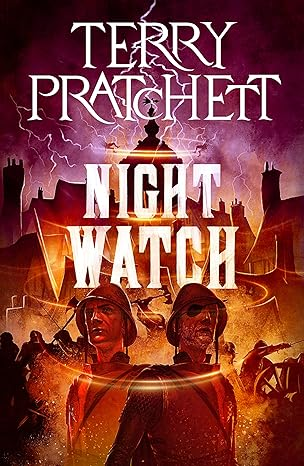
If you want to understand why this moment matters, you need context. Night Watch is often considered Pratchett's masterpiece—a time-travel story that's really about revolution, loss, and the compromises we make to survive. The Dibbler scene is a moment of levity in a very dark book, which makes it stand out even more.
But to fully appreciate what Dibbler represents, watch him in action:
- In Moving Pictures, he becomes a film mogul and nearly awakens an ancient evil through the power of merchandising
- In Soul Music, he manages a rock band and invents the concert economy
- In scattered appearances throughout the series, he sells sausages of dubious provenance and dreams of the scheme that will finally work
He's always failing. He's always there. He's always optimistic.
And now you know: his catchphrase came from the future, given to him by a man who'd heard it a thousand times, in a loop that was "evened out by the history monks."
The Bottom Line
The origin of "cutting me own throat" is a time-travel paradox with no solution. The catchphrase exists because it exists, circulating endlessly between Vimes and Dibbler, past and future, without ever actually being invented.
This is perfect for Dibbler because Dibbler himself is a paradox—an entrepreneur who always fails but never stops, a salesman whose terrible products somehow sustain him, a man who exists because the story demands it rather than because economics allow it.
When Vimes said "close enough" to young Dibbler's first attempt at his catchphrase, he wasn't creating anything new. He was confirming something that was always going to happen. The universe needed CMOT Dibbler, complete with catchphrase, and it used time travel to make sure he existed.
The History Monks smoothed over the paradox. But they couldn't erase the fundamental truth it reveals: some things on the Discworld are inevitable. Not because of fate. Because the story demands them.
And at that price? The universe is cutting its own throat.
Interested in more Discworld paradoxes? Explore how Vimes used time travel to mentor his younger self, or discover why Dibbler's film career almost destroyed reality.