Alive, Dead, and Bloody Furious: How Greebo Became Discworld's Perfect Parody of Schrödinger's Cat
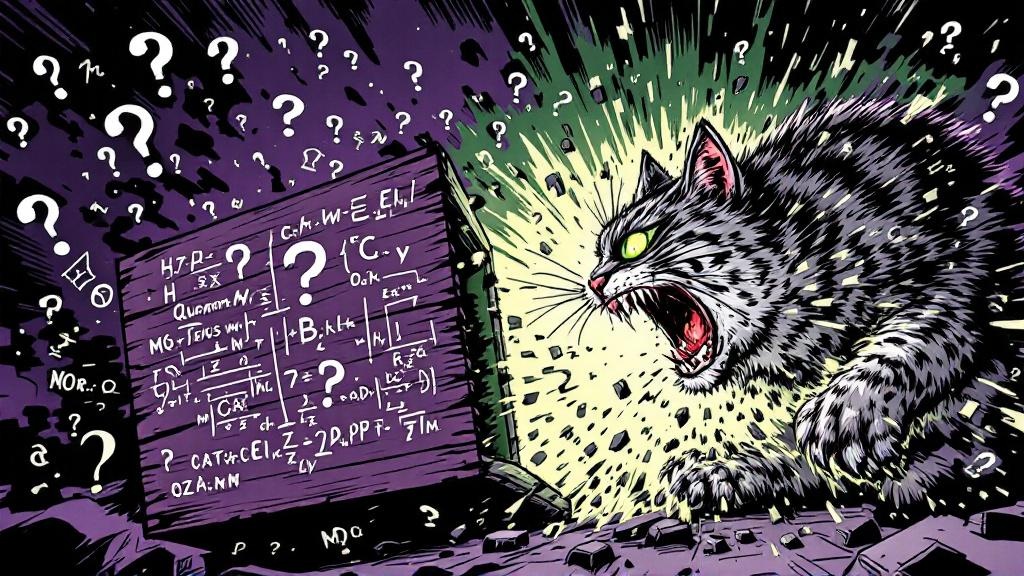
Terry Pratchett turned Schrödinger's cat thought experiment into one of Discworld's most-quoted jokes. When Greebo met quantum physics, the cat fought back.
Alive, Dead, and Bloody Furious: How Greebo Became Discworld's Perfect Parody of Schrödinger's Cat
In 1935, physicist Erwin Schrödinger proposed a thought experiment to expose the absurdity of quantum mechanics. He imagined a cat in a sealed box, its fate tied to a random quantum event. Until you open the box, the cat exists in a superposition of states—simultaneously alive and dead. It was meant to be ridiculous. It was meant to prove that quantum theory couldn't possibly apply to the real world.
Terry Pratchett read that and thought: What if the cat had opinions about the arrangement?
The Setup: A Cat, a Box, and Some Very Unfortunate Elves
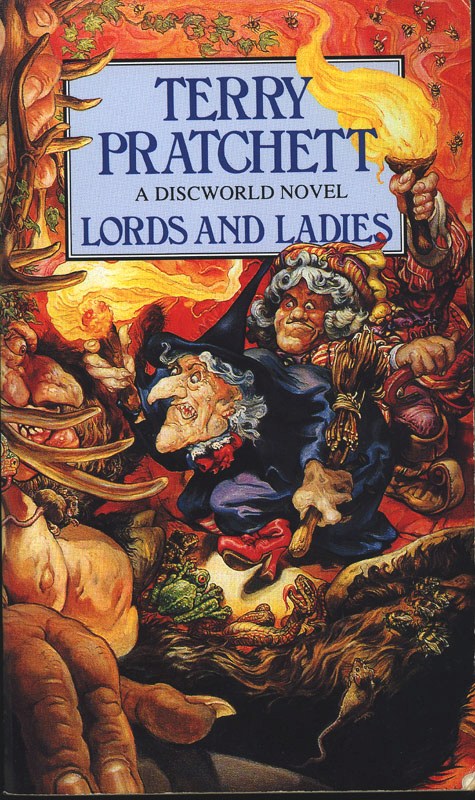
Lords and Ladies is, at its core, a book about the terrifying reality hiding behind beautiful surfaces. The elves aren't the delicate, benevolent creatures of fairy tales—they're parasites who feed on fear and glamour, and they've come to Lancre with every intention of staying.
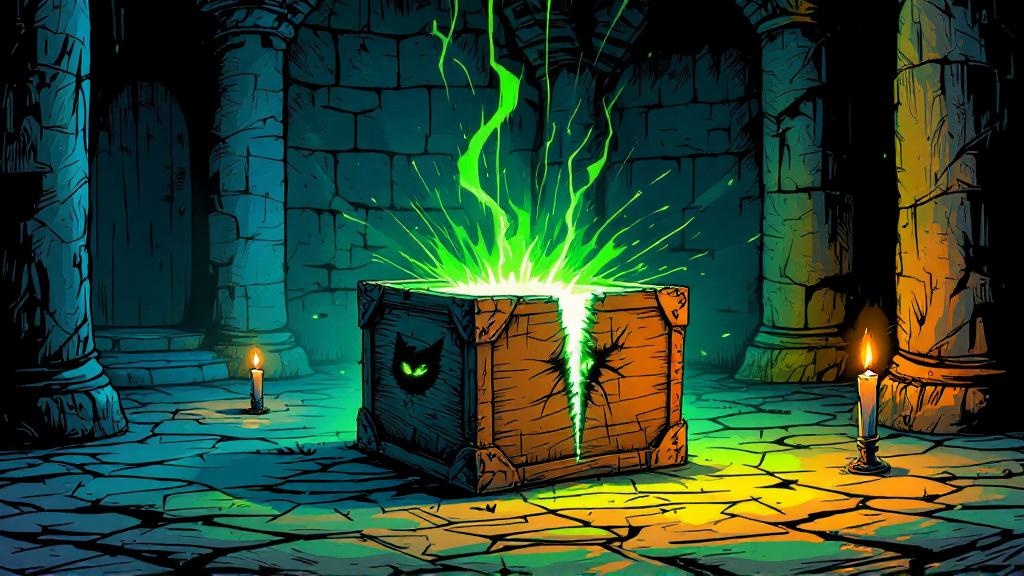
Magrat Garlick, the youngest witch, has transformed herself into a warrior queen wearing the armour of Queen Ynci the Short-Tempered. She's fighting elves in Lancre Castle, improvising weapons from whatever's at hand. And what she has at hand is Greebo—Nanny Ogg's enormous, one-eyed, battle-scarred tomcat, stuffed into a box.
It's not an obvious weapon. But then, Magrat knows exactly what Greebo is, even if Nanny doesn't.
Three Determinate States
Here's the passage that made Greebo immortal—or at least, more immortal than he already was:
"Greebo had spent an irritating two minutes in that box. Technically, a cat locked in a box may be alive or it may be dead. You never know until you look. In fact, the mere act of opening the box will determine the state of the cat, although in this case there were three determinate states the cat could be in: these being Alive, Dead, and Bloody Furious."
"Three determinate states: Alive, Dead, and Bloody Furious."
That's the whole joke. And it's perfect.
It works because it does what Pratchett always did best: it takes an abstract intellectual concept and makes it viscerally, physically real. Schrödinger's cat is a philosophical abstraction. Greebo in a box is a war crime about to happen.
The elf opens the box. Greebo goes off "like a Claymore mine." And Magrat—sweet, uncertain, underestimated Magrat—watches the carnage and says: "Don't worry about him. He's just a big softy."
That's not just a punchline. That's three punchlines stacked on top of each other.
Why This Joke Cuts Deeper Than It Seems
The surface-level humour is obvious: cat in box, science joke, violence. But Pratchett was doing something sharper here.
Schrödinger designed his thought experiment to show that quantum mechanics produces absurd results when applied to everyday objects. The cat can't actually be alive and dead at the same time—that's the whole point. The thought experiment is a reductio ad absurdum, a way of proving something is wrong by showing where its logic leads.
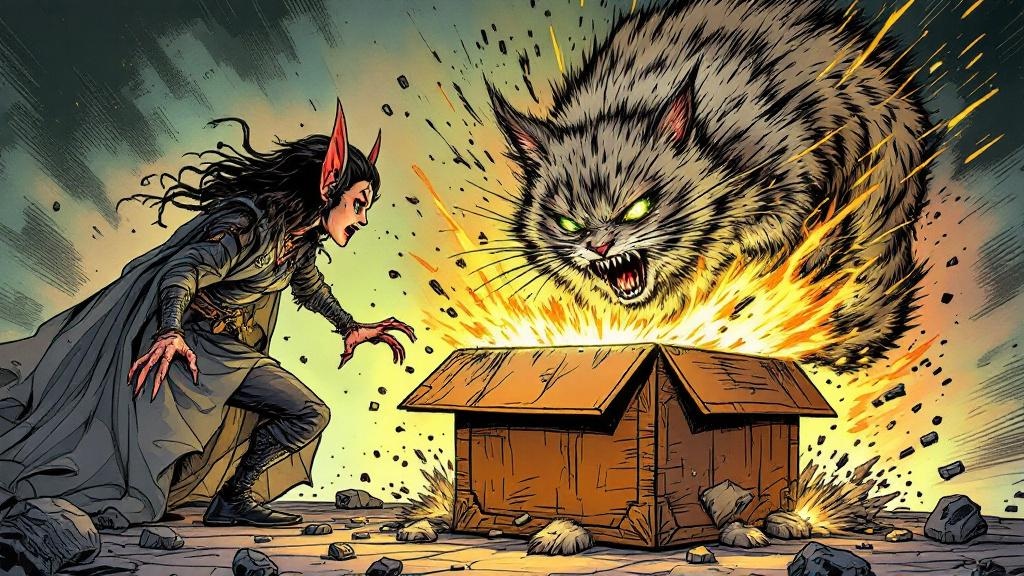
Pratchett agrees with Schrödinger, but from the opposite direction. He's not saying quantum physics is wrong—he's saying it has never met a real cat. Academic theory is lovely until it encounters something with claws and an attitude problem. The universe might be uncertain about the state of the cat. Greebo is not uncertain about anything.
That's the Discworld method in miniature. Take something humans debate in the abstract—philosophy, religion, justice, quantum mechanics—and make it walk around on two legs (or four) and see how it holds up.
Pratchett's Pattern: Making the Abstract Bleed
This wasn't the first time Pratchett weaponised real-world science against itself, and it wouldn't be the last.
"Everyone may be right, all at the same time. That's the thing about quantum."— Terry Pratchett, Lords and Ladies
Lords and Ladies is full of quantum mechanics. The whole plot runs on the idea that multiple universes exist side by side, separated by thin barriers that the elves can slip through. The witches use "quantum certainty"—the sheer bloody-mindedness to insist that reality works the way they say it does—to keep the barriers sealed.
But where other authors might have kept the physics respectful and reverent, Pratchett turned it into comedy about stubbornness. Granny Weatherwax doesn't understand quantum mechanics. She doesn't need to. She just knows that when she says something is real, it is real, and the universe can sort out the paperwork later.
Greebo's box scene is the animal version of that same principle. Quantum physics says the cat is in superposition. Greebo says he's in a box and someone is going to pay for it. Greebo wins.
The Comedy of Mismatched Expectations
Part of what makes this passage so endlessly quotable is the collision of registers. You've got formal scientific language—"technically," "determinate states," "the mere act of opening the box will determine the state"—slammed into something profoundly unscientific: a furious cat.
It's the same trick Pratchett used with Death speaking in CAPITALS, or with the Auditors trying to fill out paperwork about the nature of existence. The comedy comes from the gap between how we describe things and how things actually are.
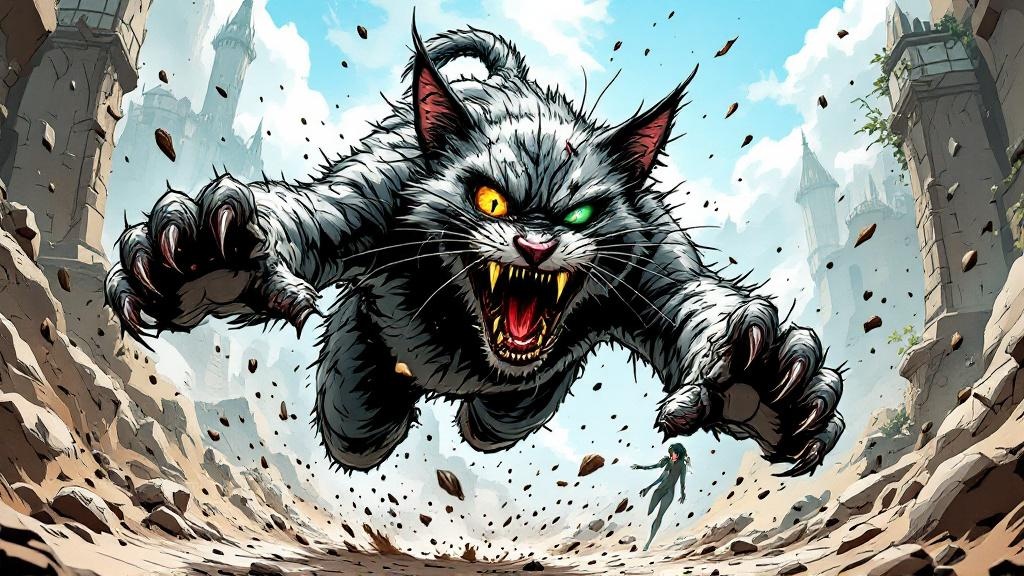
Schrödinger described his cat with clinical detachment. Pratchett described Greebo as a walking catastrophe who once chased a bear up a tree and "seriously surprised" a she-bear who was innocently digging for roots. These are not the same kind of cat. And the joke is that quantum mechanics doesn't know the difference.
Greebo: The Cat Who Didn't Care About Your Thought Experiment
To appreciate the joke fully, you need to understand what Greebo is. He's not a cat in the way that Mr. Tiddles from next door is a cat.
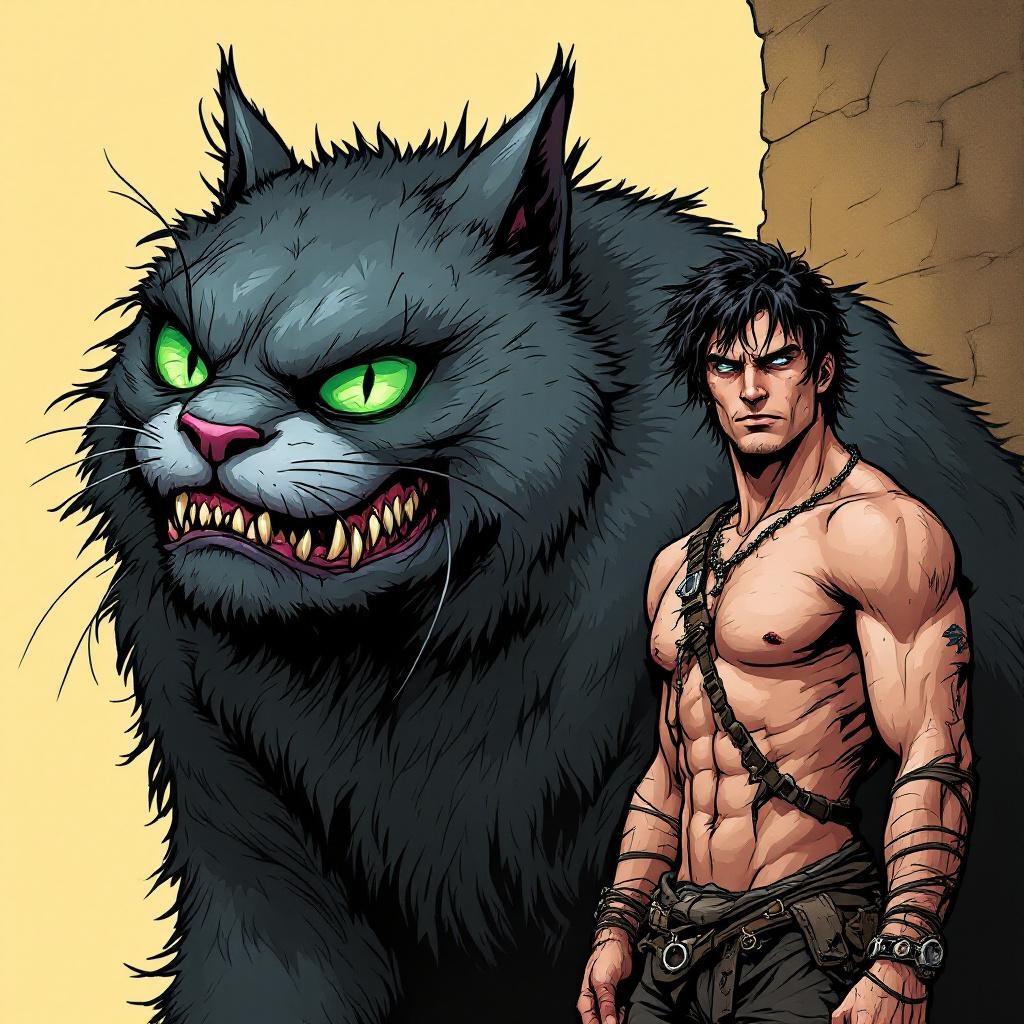
Greebo is an enormous, battle-scarred grey tom with ragged ears, one milky eye, and a smell that could cause "sinus trouble in a dead fox." He has three categories for everything he encounters: things to fight, things to eat, and things to mate with. Wolves climb trees to get away from him. He's killed at least two vampires—one by eating it in bat form, because as far as Greebo was concerned, it was just "a mouse with wings on."
"Vampires have risen from the dead, the grave and the crypt, but have never managed it from the cat."
This is the cat that Magrat put in a box and aimed at the elves.
Schrödinger imagined a passive cat, sitting quietly while physics decided its fate. Greebo is not a passive cat. Greebo has never been passive about anything in his life. The thought experiment assumes the cat is a victim of circumstance. Greebo is a cause of circumstance.
That's the real joke. Schrödinger's cat is famous because it illustrates the weirdness of observation affecting reality. Greebo is famous because he illustrates the reality of a cat affecting everything within claw range.
Magrat's Perfect Line
After Greebo tears into the elf, Magrat says: "Don't worry about him. He's just a big softy."
This is pure Pratchett craft. It echoes Nanny Ogg's lifelong delusion about Greebo—that he's "a cute little bundle of fluff" rather than a feline war criminal. But coming from Magrat, who's currently dressed as a warrior queen and fighting for her kingdom, it takes on a different shade.
Magrat isn't deluded like Nanny. She knows exactly what Greebo is. She put him in that box because she knew. The line is deadpan. It's the same kind of understatement you'd hear from a soldier describing an airstrike as "a bit of a kerfuffle."
It's also Magrat's character arc in a single sentence. This is the witch who spent two books being uncertain and overlooked. Now she's using a weaponised cat against an invading army and making jokes about it. Queens don't explain their ordinance.
Why This Passage Endures
Search for "Schrödinger's cat" online and you'll find Pratchett's version within the first page of results. It's quoted on physics forums, on cat appreciation pages, on Tumblr posts that have been reblogged thousands of times. It shows up in university lectures about quantum mechanics—usually as the comic relief slide, but sometimes as a genuine teaching tool.
It endures because it does what the best comedy does: it makes a complex idea instantly accessible. You don't need to understand superposition or wave function collapse to get the joke. You just need to have met a cat.
And if you've met a cat, you know that Pratchett got it right. Schrödinger imagined a theoretical cat as a passive thought experiment. Pratchett imagined a real cat and asked what would actually happen.
The answer, obviously, is Bloody Furious.
The Book That Contains It All
If you haven't read Lords and Ladies, the Greebo scene is just one reason to pick it up. It's a book about the seductive danger of nostalgia, the terrifying reality behind fairy tales, and the power of choosing to see the world as it actually is rather than how you'd like it to be. Also, it has a cat going off like a landmine at an elf, which honestly should be enough.


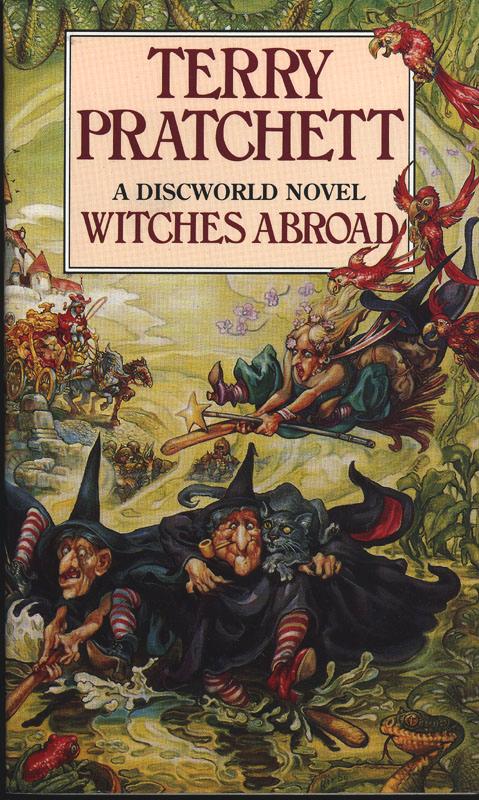
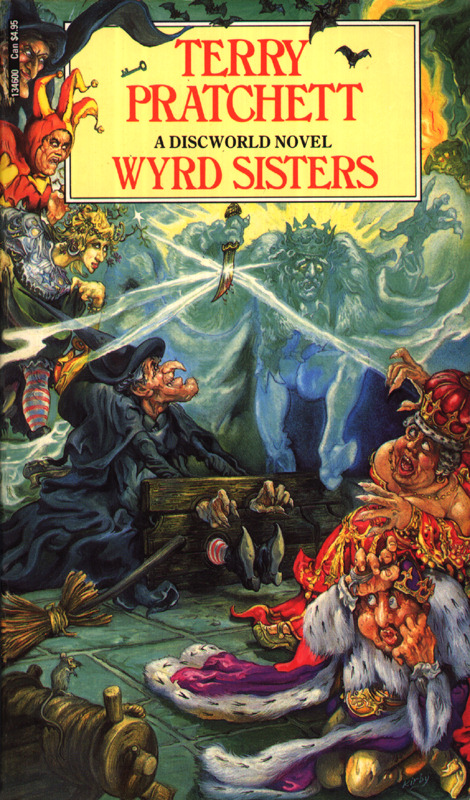
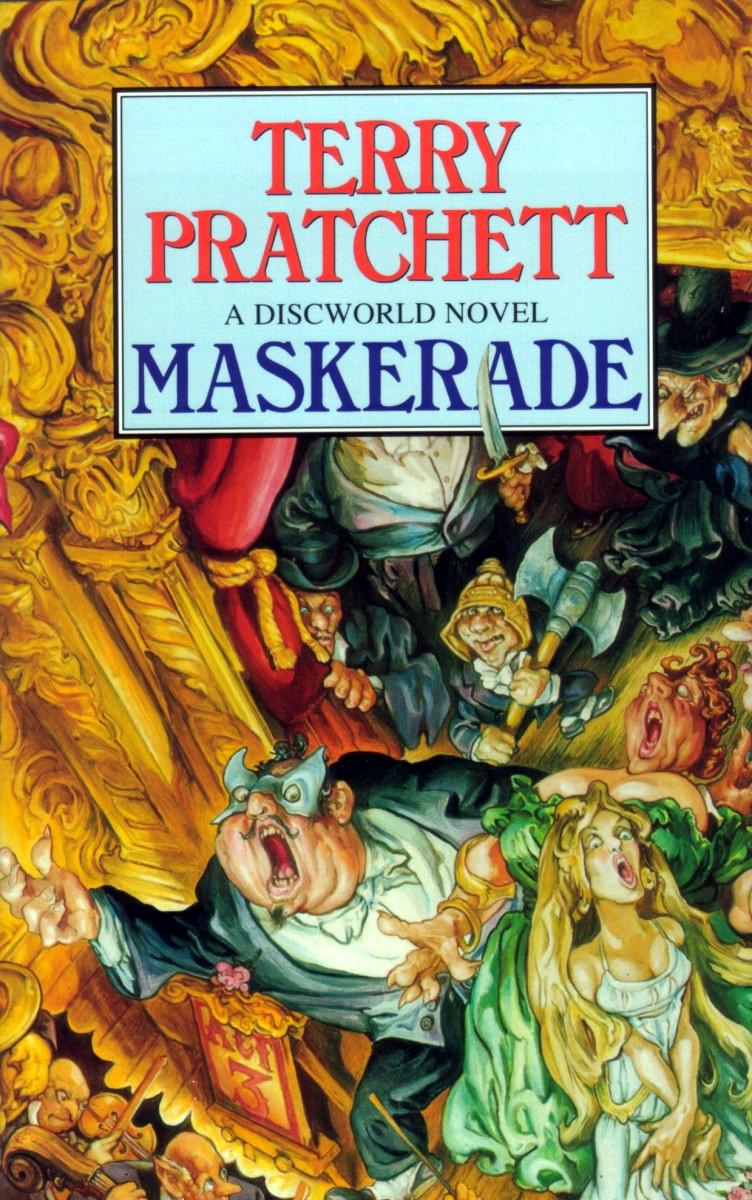
And if you want more Greebo after that, Witches Abroad has him eating a vampire and transforming into the most dangerously attractive man in Genua. Maskerade puts him in the Opera House as "Count Gribeau." Neither book features quantum physics, but both feature a cat who would consider Schrödinger's box a personal insult.
The cat has been observed. The cat has opinions. The cat would like a word.