Death vs. The Auditors: The Cosmic Battle That Spans Discworld
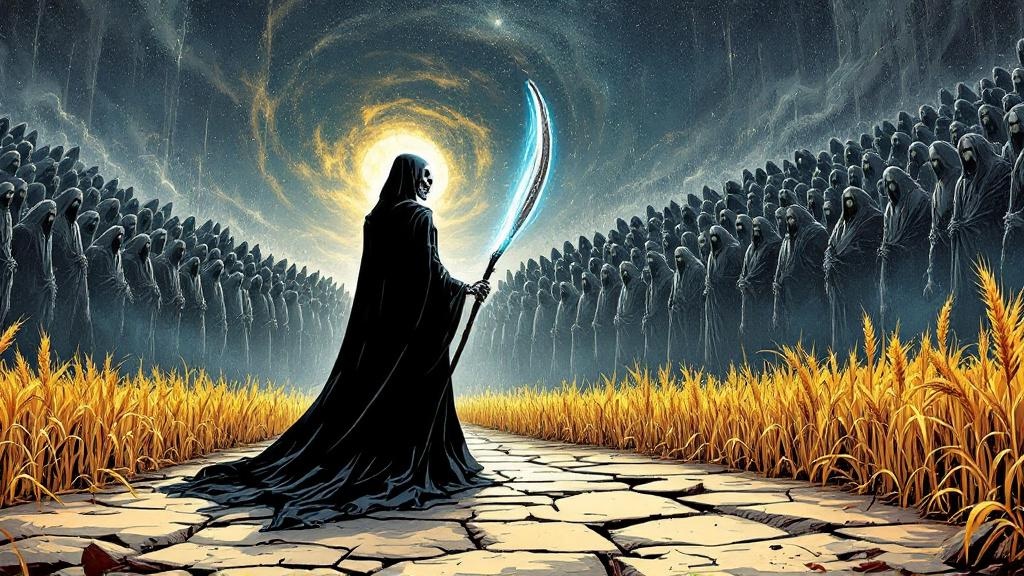
The Auditors of Reality are Death's true antagonists across Discworld. Their war over order, meaning, and personality defines Pratchett's greatest theme.
Most fantasy villains want power, revenge, or world domination. The Auditors of Reality want something far more terrifying: they want everything to be tidy.
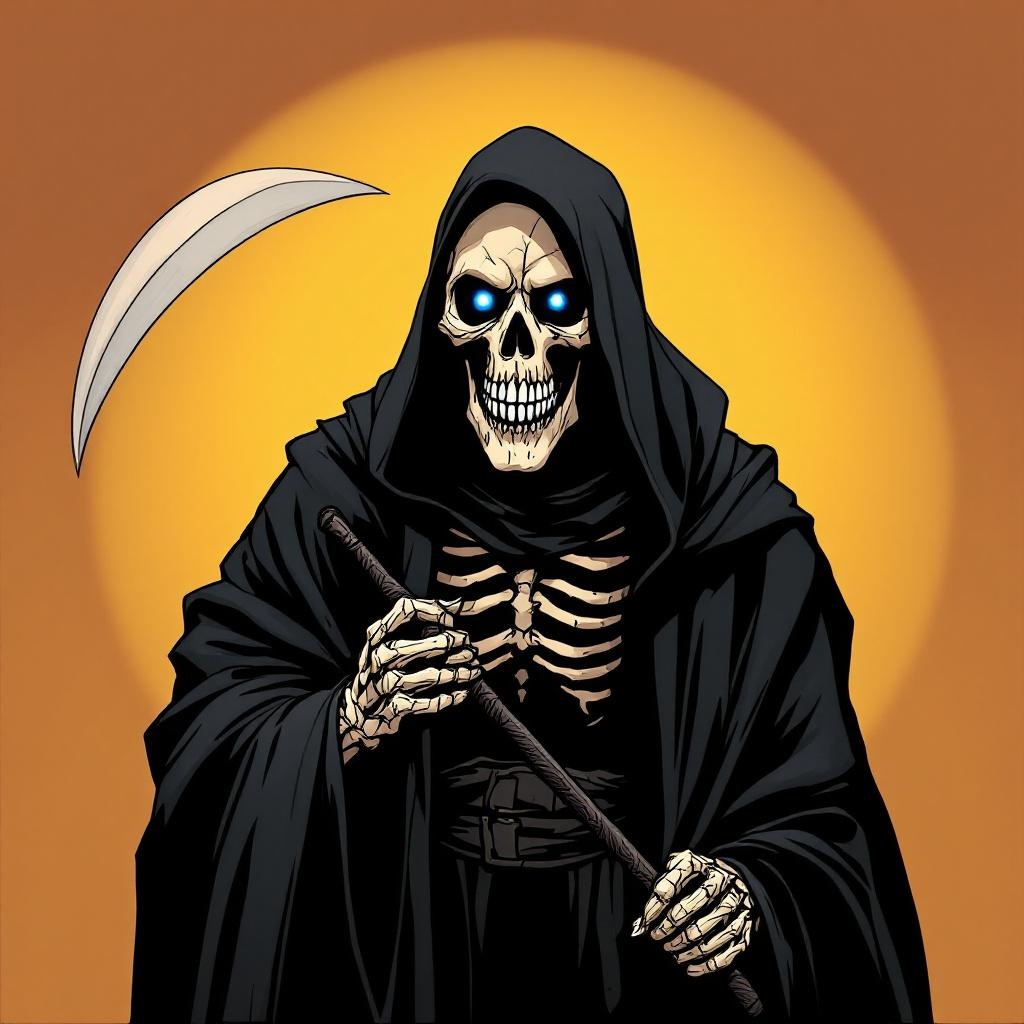
They don't hate Death because he's dangerous. They hate him because he has a personality. He has opinions. He rides a horse called Binky and keeps cats and eats curry, and none of that is in the job description. For cosmic bureaucrats who file the paperwork for every chemical reaction in the universe, Death's fondness for humanity isn't just unprofessional—it's an offense against the natural order.
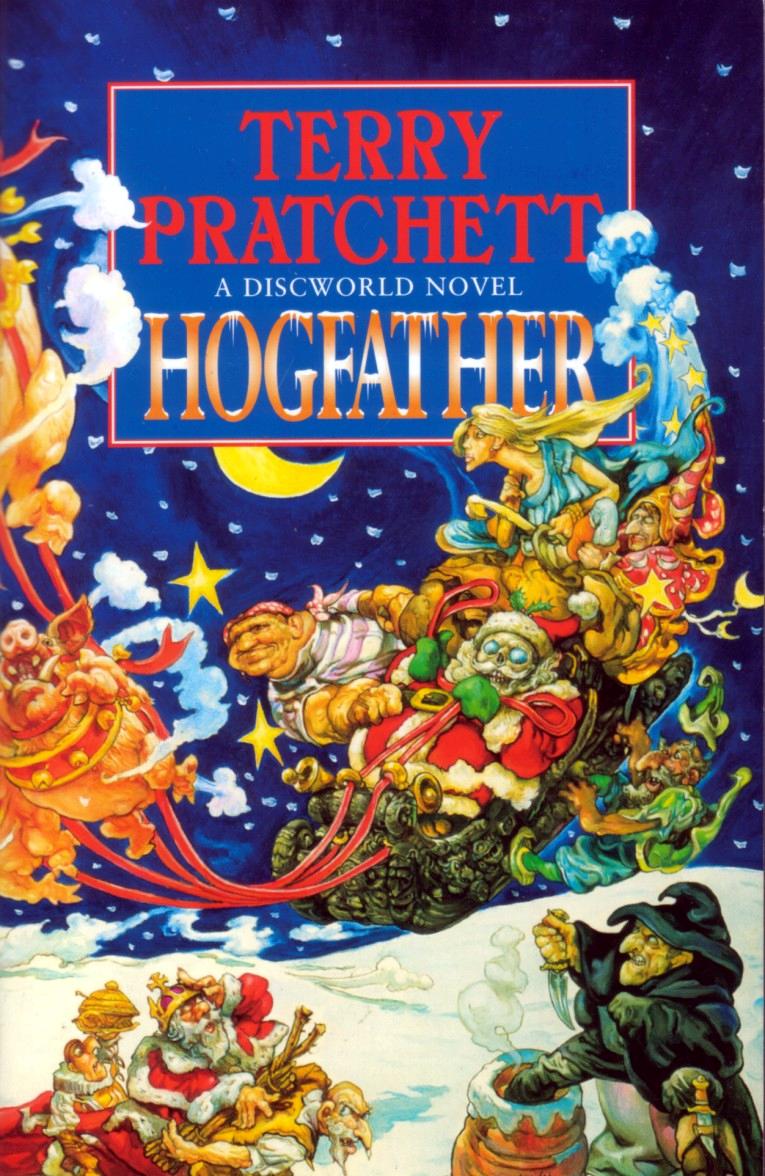
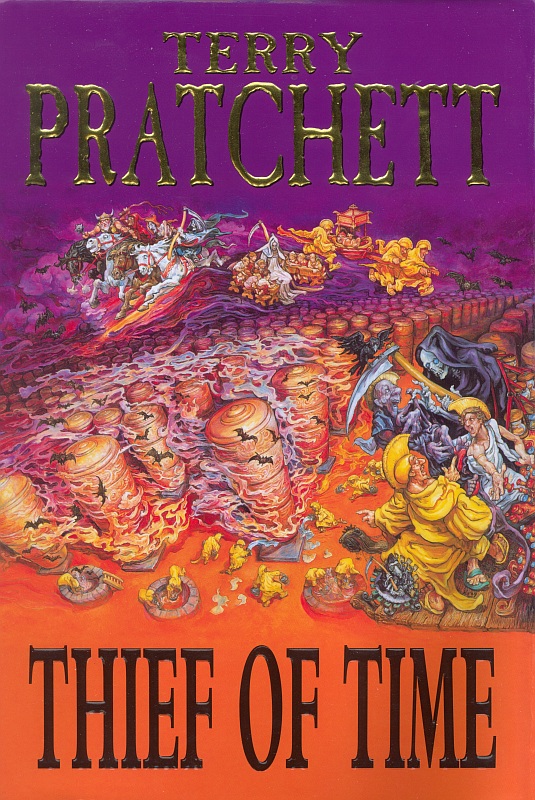
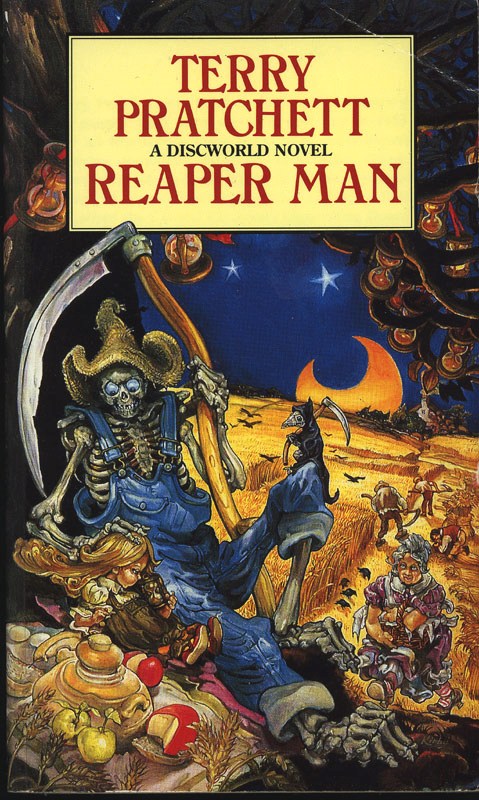
The conflict between Death and the Auditors spans three novels—Reaper Man, Hogfather, and Thief of Time—and it's the closest thing Discworld has to an overarching war between good and evil. Except it's not really about good and evil. It's about meaning versus tidiness. And the Auditors keep losing, because it turns out meaning is harder to kill than they thought.
The Grey Bureaucrats
The Auditors of Reality are among Terry Pratchett's most unsettling creations precisely because they're not dramatic. They don't cackle or monologue. They're grey robed figures who hover and speak without pronouns, because using "I" would imply individuality, and individuality would mean they exist, and existing would mean they could die.
That last bit matters. The Auditors are terrified of becoming individuals. They enforce cosmic order not out of ideology but out of existential self-preservation. If the universe runs smoothly—stars orbiting in neat ellipses, rocks doing nothing interesting—then there's no need for anyone to be anything. It's when life shows up, messy and unpredictable and full of feelings, that things get complicated.
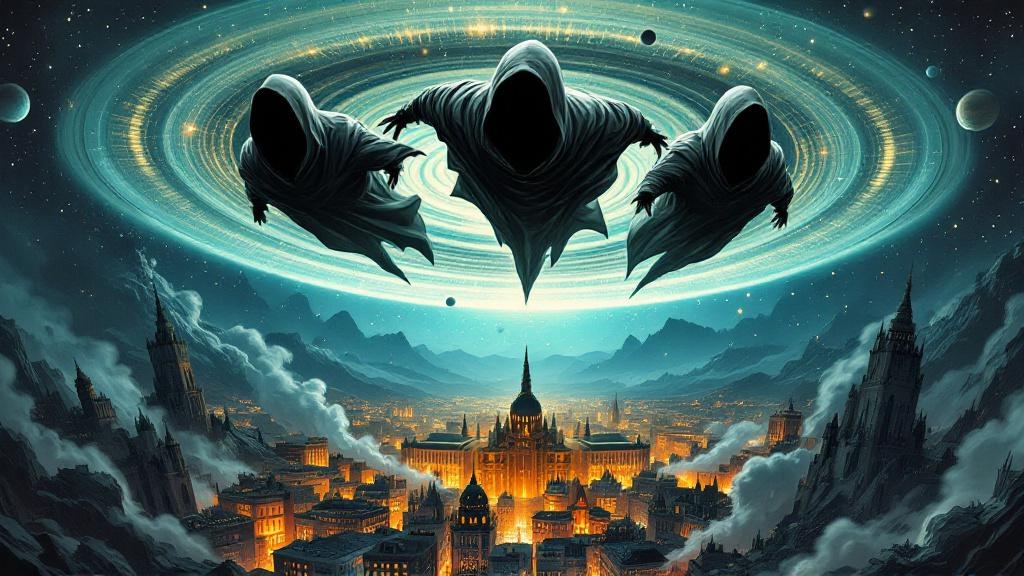
They despise life in all its forms. But they especially despise Death, because he should be on their side. He's a fundamental force of the universe. He should be cold, impersonal, mechanical. Instead, he's developed a personality—and worse, he's developed preferences. He thinks cats are nice. He finds humans fascinating. He went to a job fair to hire an apprentice.
From the Auditors' perspective, this is like discovering your calculator has started writing poetry.
Round One: Reaper Man—"You're Fired"
The Auditors' first major move against Death comes in Reaper Man, and it's devastatingly bureaucratic. They don't fight him. They don't banish him. They give him a gold watch and a life-timer with sand running out.
They retire him.
"No crown. No crown. Only the harvest."
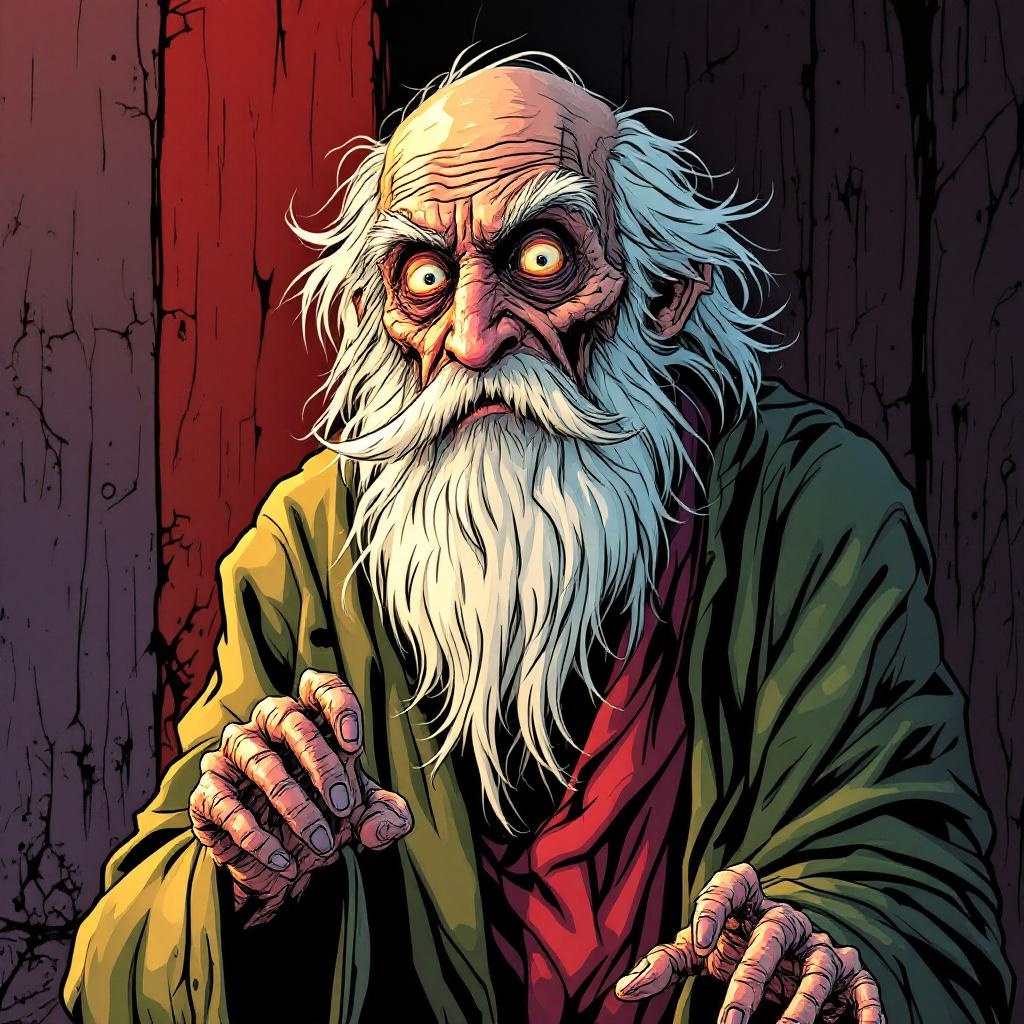
Death, now mortal and calling himself Bill Door, ends up working as a farmhand for the elderly Miss Flitworth. Meanwhile, the Disc descends into chaos because nobody's collecting the dead. Life force accumulates. Poltergeist activity erupts. The undead start organizing.
But the Auditors' real plan is more insidious than just firing Death. With the original gone, humanity's collective fear and belief generates a replacement—a New Death. And this one has a crown.
The crown is everything. The original Death never wore one. He never saw himself as a king or a ruler. He's a harvester, a caretaker—someone who does a necessary job with something like compassion. The New Death, born from raw human terror, sees itself as a sovereign. Death as tyrant. Death as conqueror.
When Bill Door confronts the New Death in the climactic scene, armed only with a harvest scythe made tangible by Miss Flitworth's sacrifice of her own remaining time, the distinction becomes Pratchett's thesis statement on what Death should be:
NO CROWN. NO CROWN. ONLY THE HARVEST.
It's one of the only times in the series Death uses an exclamation mark. That's how much it matters to him. Death is not a king. He's a farmer who cares for the crop.
Round Two: Hogfather—Killing Belief Itself
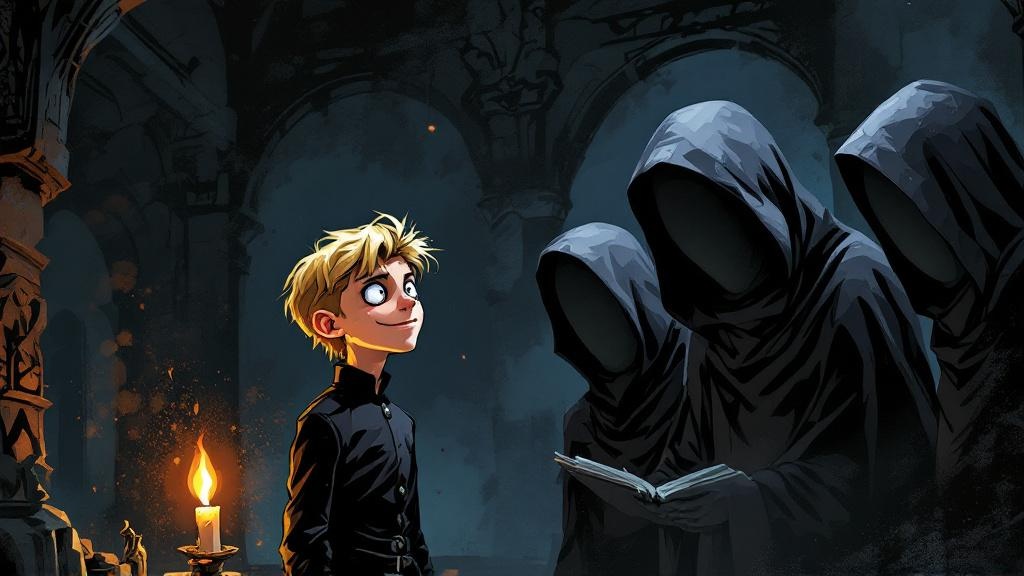
The Auditors' second assault on meaning is more sophisticated. In Hogfather, they don't target Death directly—they go after belief. They hire Jonathan Teatime (it's pronounced Teh-ah-tim-eh, he'll thank you to remember) through the Assassins' Guild to "inhume" the Hogfather, Discworld's equivalent of Santa Claus.
Their logic is coldly elegant. If you can kill belief in one major figure, you weaken humanity's overall capacity for belief. The freed-up belief scatters and creates dozens of absurd minor gods—the Verruca Gnome, the Eater of Socks, the Hair Loss Fairy. Belief fragments. Gets trivial. Loses its power to sustain the big concepts like justice, mercy, and duty.
Death's countermove is gloriously literal. If the Hogfather can't do his rounds, he'll do them. Skeleton in a red suit. Pillow for a belly. Fake beard. His opening line to children is not "HO HO HO" but something closer to "COWER, BRIEF MORTALS" before Albert hastily corrects him.
"There's no better present than a future."
But beneath the comedy, Death understands the stakes better than anyone. The Auditors aren't trying to ruin one holiday. They're trying to break the mechanism by which humans create meaning. And Death—who exists because humans invest the universe with personality and narrative—knows what happens when that mechanism fails.
The most devastating scene comes when Death encounters a little match girl freezing to death in the snow. Albert tells him this is just how Hogswatch works—poor children die, rich people feel grateful they're not poor. Death refuses. As the Hogfather, he can do what Death cannot: give her a future. Because "THERE'S NO BETTER PRESENT THAN A FUTURE."
The Auditors lose again. But they're learning.
Round Three: Thief of Time—Stop the Clock
By Thief of Time, the Auditors have realized that piecemeal attacks on Death and belief won't work. So they go for the nuclear option: stop time entirely.
No time means no change. No change means no life. No life means no messy, unpredictable, personality-having creatures cluttering up their nice orderly universe.
Their method is characteristically indirect. They commission a clockmaker named Jeremy Clockson to build a perfect glass clock that will capture and freeze time itself. But to operate on the Disc, they need a human intermediary. So one of them takes human form as the elegant Lady Myria LeJean.
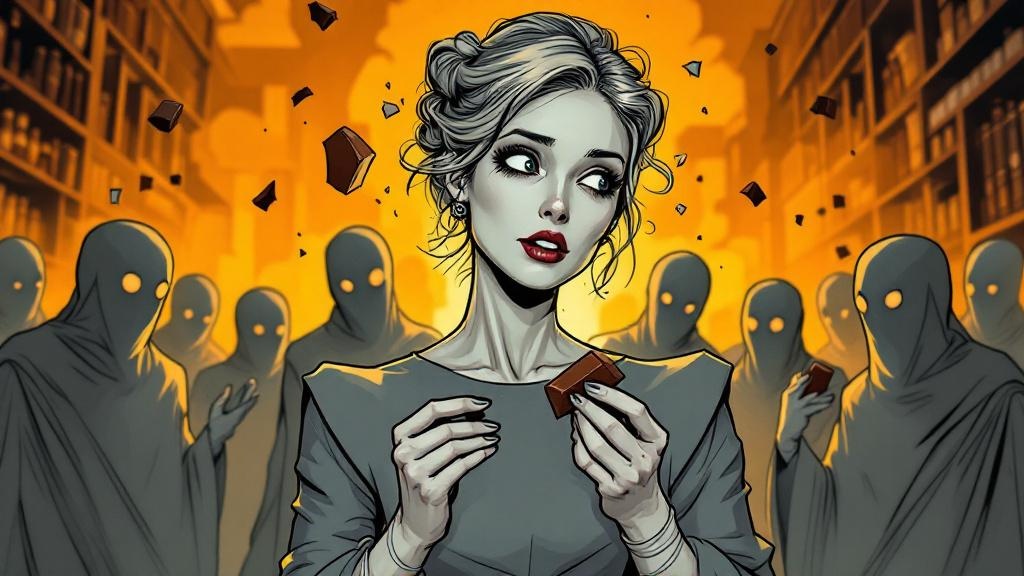
This is where Pratchett's genius really shows. Lady LeJean's story becomes the book's secret weapon—a meditation on what happens when pure order tries to wear a human body.
The body has opinions. It wants chocolate. It feels cold. It notices that Jeremy Clockson has nice hands. These aren't thoughts—they're sensations, raw and unfiltered, and for a being that has never experienced input before, they're completely overwhelming.
Other Auditors who take human form fare worse. They discover taste and become helpless before it. Chocolate, in particular, destroys them. The sensory experience is so intense, so individual, that it forces them into personhood—and once they have a self, they can die.
Lady LeJean—renamed Unity by Susan—goes further than any of them. She doesn't just tolerate humanity. She chooses it. In the climax, she sacrifices herself by diving into a vat of chocolate, destroying the Auditors who have taken human form. She's become human enough to earn herself a soul—to walk the desert that lies beyond, to have an afterlife.
An Auditor. With an afterlife. Because she learned to like chocolate and feel things.
What the Auditors Really Are
Here's the thing about the Auditors: they're not just sci-fi villains in fantasy clothing. They're a philosophical argument.
The Auditors represent the universe without meaning. Pure physics. Pure math. Stars doing what stars do because the laws of physics say they must. No justice, no mercy, no narrative. Just atoms bumping into atoms forever, in neat predictable patterns.
Death represents the opposite: the universe with meaning. Not meaning that was built in—meaning that someone put there. Death exists because humans looked at the end of life and decided it needed a face. They invested the inevitable with personality and narrative. They turned an equation into a character.
The Auditors want to undo that. They want a universe that runs itself, where nothing has a name and nothing has a story and nothing, ever, has an opinion about anything.
And they keep losing because it turns out you can't stuff meaning back into the bottle. Once something has a personality, once something cares, the grey order of the Auditors is already doomed. Lady LeJean proved it: even an Auditor, given a body and five minutes near a box of chocolates, becomes a person.
Why Death Wins
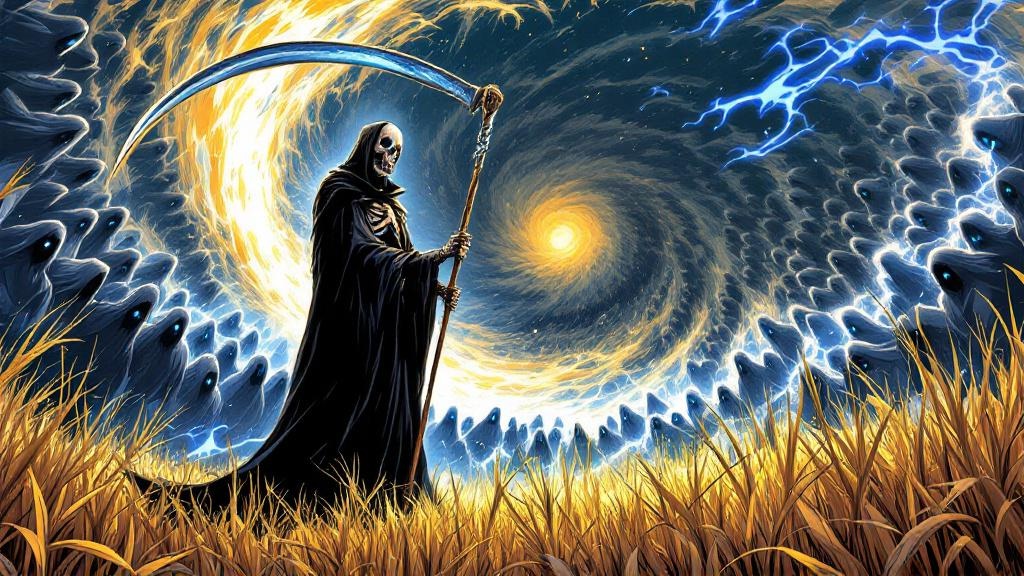
Death beats the Auditors three times, and each time the reason is the same: he has what they lack. Not power—the Auditors are far more powerful than Death in raw cosmic terms. What he has is personality.
In Reaper Man, his love for the harvest—his understanding that death is care, not conquest—lets him destroy the crowned pretender. In Hogfather, his willingness to look absurd in a red suit saves humanity's capacity for belief. In Thief of Time, it's his granddaughter Susan and an Auditor-turned-human who deliver the final blow, proving that personality is contagious.
"What can the harvest hope for, if not for the care of the Reaper Man?"— Terry Pratchett, Reaper Man
The Auditors' fundamental error is thinking personality is a bug. A glitch in an otherwise clean system. Something to be patched out. But Pratchett argues it's the other way around: personality is the point. The universe without it—the Auditors' perfect, tidy, meaningless cosmos—isn't a universe worth having.
Death understands this because he's lived both sides. He's been the impersonal force of nature the Auditors want him to be, and he's been Bill Door the farmhand who worried about the harvest. He knows which one matters.
The War Isn't Over
The Auditors lose every direct confrontation, but Pratchett is too smart to pretend the war is ever truly won. The forces of tidiness, of stripping meaning from the world, of reducing everything to numbers and efficiency—those don't go away because you beat them once.
Every time someone says "it's just a story" or "emotions aren't rational" or "there's no point getting attached," the Auditors win a tiny battle. Every time a bureaucracy treats people as numbers, every time an institution prioritizes process over humanity, every time someone argues that the universe is "just" atoms and nothing more—that's the Auditors' logic at work.
Death's answer is always the same. It's the answer he gave when he saw the crowned pretender. It's the answer he gave when he saved the little match girl. It's the answer his granddaughter Susan learned, and the answer Lady LeJean died for:
The universe doesn't come with meaning. We bring it. And that's not a weakness—it's the only thing that makes any of it worth doing.
No crown. Only the harvest.

For more on Death's philosophy, explore the Hogfather speech where he makes his most famous argument for belief, or read about his time as Bill Door where he learned what mortality means from the inside. His complicated relationship with Susan shows what happens when cosmic duty meets family obligations.